
By Olivia Nygaard
Walk through any grocery store or farmers’ market and you’ll see a food label on almost everything. Terms like organic, local, natural, and sustainable often shape how people shop and what they believe about food quality. These labels influence perceptions about health, environmental impact, and food safety. But how much of what we believe about these labels is supported by scientific evidence, and how much is simply marketing?
Recent research comparing consumer perceptions with scientific data shows that while sometimes a food label reflects meaningful differences in production and environmental impact, others are less clear or easily misunderstood. Understanding which label signals real biological or environmental benefits can help consumers make more informed food choices.
What Consumers Think About Food Labels
Researchers conducted a survey at farmers’ markets in the Southern Piedmont region and asked participants questions about food systems and greenhouse gas emissions. Many respondents showed some awareness of environmental impacts, but knowledge gaps were still present.
About 53% correctly identified that both transportation and agriculture influence greenhouse gas emissions. Nearly 30% said they did not know which factors influence emissions. When asked whether lifestyle choices affect greenhouse gases, responses were split almost evenly.
These results suggest that consumers are thinking about sustainability when making food choices. However, the scientific details behind food production are not always widely understood. This gap between perception and evidence shows why clearer communication about food labels is important.
When “Organic” Reflects Real Differences
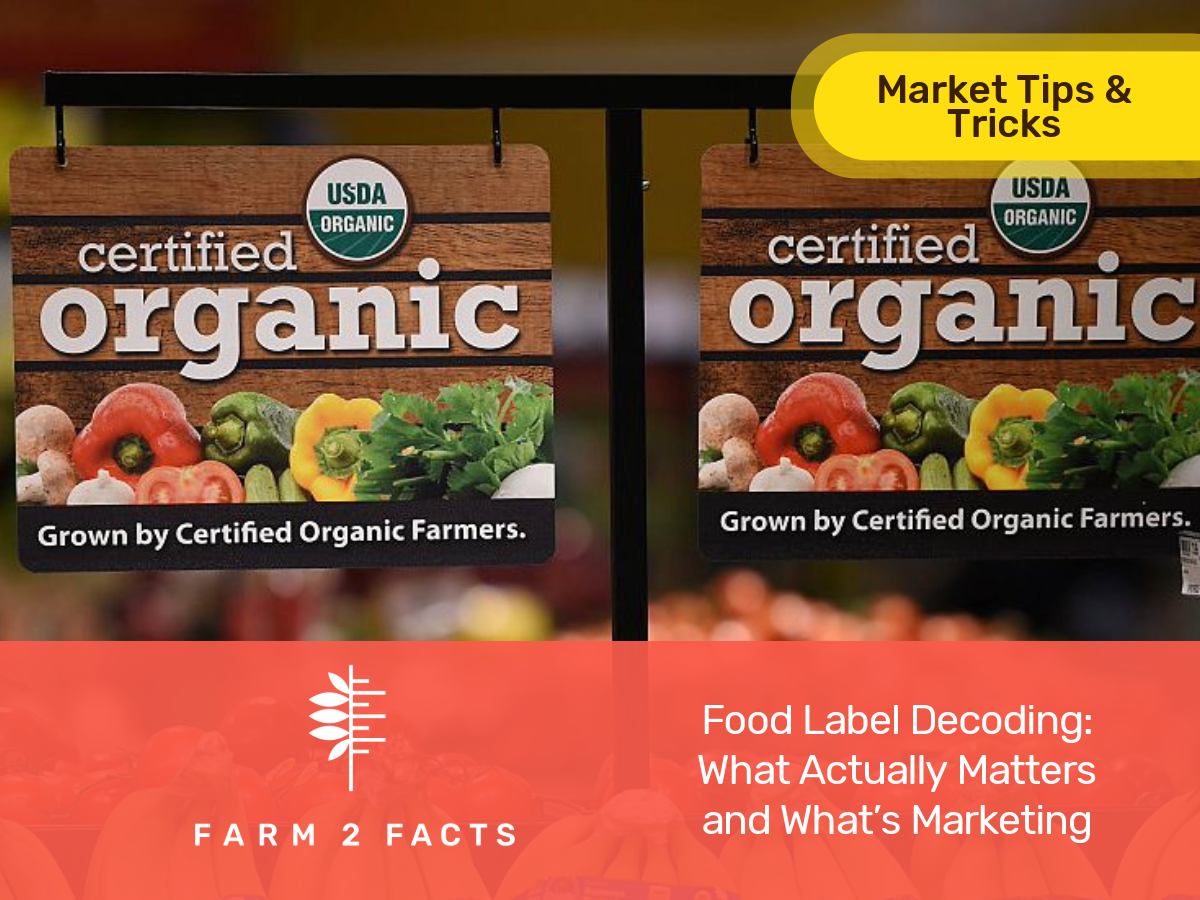
Among food labels, organic is one of the most clearly defined. Organic certification restricts the use of synthetic pesticides and fertilizers and emphasizes soil health and ecological balance.
Scientific studies show that these practices can result in measurable differences. Researchers have found that organic crops contain between 18% and 69% higher concentrations of antioxidants. These compounds may reduce the risk of chronic disease. Research has also reported higher levels of minerals such as iron and magnesium in some organically grown vegetables.
Organic foods also consistently show lower pesticide residue levels than conventionally grown produce. USDA data indicates that more than 99% of conventional food samples fall within established safety limits. However, organic farming systems reduce exposure to synthetic chemicals and promote alternative pest management strategies.
This means the organic label often reflects real differences in production practices and environmental outcomes. Nutritional differences do exist in some cases, although they are not always large enough to dramatically change health outcomes on their own.
The Truth About “Local”
The term local is widely associated with sustainability, freshness, and supporting regional economies. In many cases these associations are valid, but the environmental story is more complex than simply distance traveled.
Transportation represents only one part of food’s environmental footprint. Research shows that production methods and land use often have a larger impact on greenhouse gas emissions than transportation alone.
Even so, local food systems can still provide environmental benefits. Shorter supply chains reduce transportation energy. Studies have found that large conventional distribution systems can generate five to seventeen times more transportation related emissions than local or regional supply networks.
Local food also provides advantages beyond emissions. These include supporting regional farmers, improving access to fresh seasonal foods, and strengthening community connections to food systems. Farmers’ markets provide a clear example of how local food networks let consumers interact directly with producers and learn how they grow food.
A Label That Is Mostly Marketing
Not every label carries the same level of meaning. Terms such as natural, farm fresh, or eco friendly often appear on packaging but are not tied to strict certification standards.
Because regulators loosely define these labels, companies often use them more as marketing tools than as scientific indicators of nutritional or environmental differences. This does not mean the products are misleading, but the label alone may not reliably explain how producers grew or produced the food.
For consumers trying to make evidence based choices, labels supported by clear standards and certification systems tend to provide more reliable information.
Why Understanding Decoding A Food Label Matters
Food labels influence how consumers navigate increasingly complex food systems. They shape purchasing decisions, market demand, and sometimes even agricultural practices. When labels are misunderstood, confusion can arise about what truly benefits human health and the environment.
Research comparing consumer perceptions with scientific data shows that many people want to make sustainable choices but do not always have clear information about how production systems affect nutrition, pesticide exposure, or greenhouse gas emissions.
Improving communication around food labels can help close this gap. When scientists, farmers, and organizations explain what food labels mean, they help consumers move beyond marketing claims and make evidence-based decisions.
Making More Informed Food Choices
Rather than relying on a single label, it can be helpful to consider several factors at once. Consumers can ask questions such as: How did farmers produce this food? What farming practices did they use? Where did it come from? What environmental impacts does this production system have?
Farmers’ markets create a unique opportunity for these conversations. Consumers can ask questions directly to the people growing their food, which provides context that labels alone cannot capture.
Looking Beyond the Food Label
Food labels can provide useful information, but they are only one part of the story. Organic certification reflects differences in farming practices and pesticide use. Local food systems can support regional economies and reduce transportation emissions. At the same time, some labels are primarily marketing language rather than scientific indicators.
As food systems continue to evolve, understanding what labels actually represent will remain important for building more transparent and sustainable food networks. When we combine scientific evidence with clear communication, consumers can make choices that align more closely with environmental goals and public health.
This material is based upon work supported by the U.S. Department of Agriculture, under agreement number NR233A750004G019.